Sir Balin
Le Morte d'ArthurSir Balin’s story is presented in the chapter headings as a chain of linked reversals: he draws a sword that is said to cause his death, later deals the Dolorous Stroke in a fight with King Pellam, and ultimately dies in an unknowingly fatal duel with his brother, Balan. The headings also identify Merlin as the one who buries the brothers together and mentions Balin’s sword, joining the weapon to the story’s ending.
Identity and Introduction
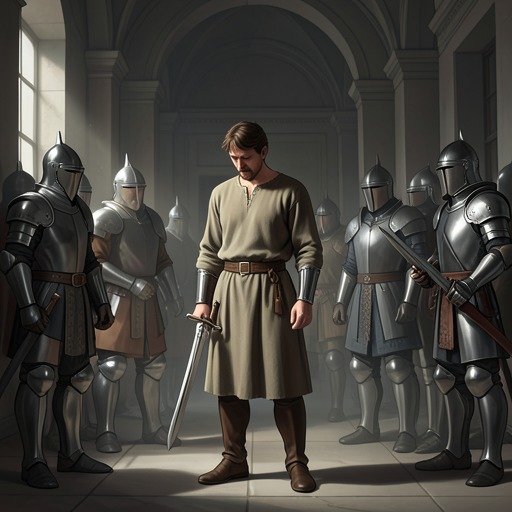
Sir Balin appears in the Second Book’s account of a damsel who arrives girded with a sword, seeking a person of such virtue that he can draw it from its scabbard. The following chapter heading says that Balin, disguised as a poor knight, pulls it free and that the sword later causes his death. This establishes both the conditions of his first appearance and the weapon’s ominous connection to his fate, without describing the test or Balin’s reasons for undertaking it.
The Sword and the Dolorous Stroke
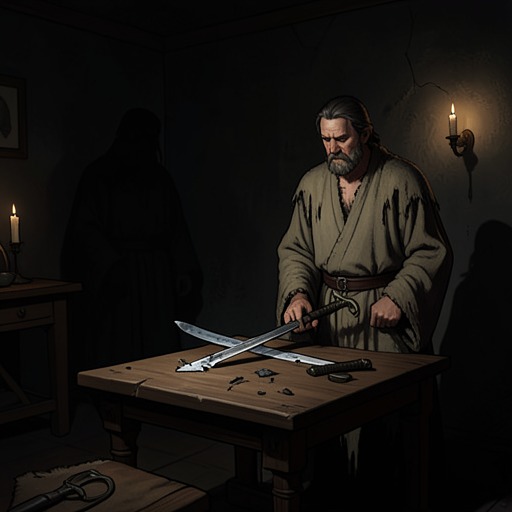
The chapter headings connect Balin’s sword to more than one consequential episode. One identifies the sword he draws as the cause of his eventual death; another describes his encounter with King Pellam, in which Balin’s sword breaks and he takes up a spear, delivering the Dolorous Stroke. The evidence establishes the change of weapon and the blow’s place in Balin’s story, but does not supply further details here about its immediate effects.
The Fatal Duel with Balan
Balin’s final encounter is with his brother, Balan. The heading says that the brothers fight without knowing each other’s identity, and that each wounds the other so severely that both are dying. Their kinship does not prevent the duel: it makes their failure to recognize one another central to the tragedy. The account as supplied does not explain how they come to meet or why they fight.
Burial and Narrative Significance
Merlin buries Balin and Balan together in one tomb; the chapter heading also returns to Balin’s sword. The shared burial gives the brothers’ ending a single memorial form, while the sword ties the close back to the weapon that marked Balin’s introduction and was named as the cause of his death. Across these brief headings, Balin’s narrative is shaped by objects, reversals, and belated recognition: the sword passes from a test of virtue to an emblem of fatal consequence, and the final encounter turns brotherhood into mutual destruction.